
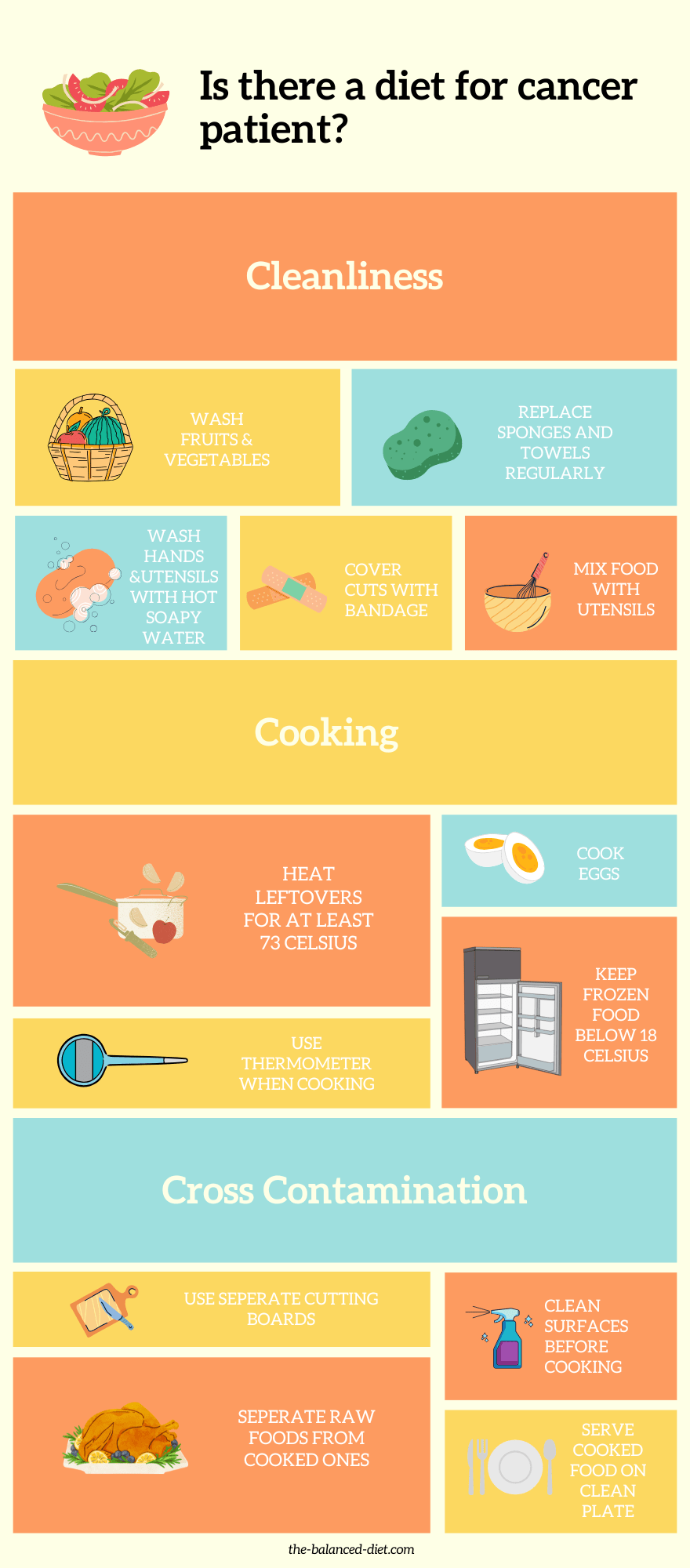

While there’s no single diet that prevents or cures cancer, nutrition plays a crucial role during treatment, especially for individuals with compromised immune systems. Implementing stringent food safety practices is vital to minimize the risk of infections and foodborne illnesses.
🧼 Key Food Safety Guidelines
Adhering to the following practices can help ensure food safety:
- Thorough Washing: Clean fruits and vegetables with a scrub brush and warm water. Store washed and unwashed produce separately.
- Regular Cleaning: Replace sponges and towels frequently. Clean up food spills and crumb-filled crevices promptly.
- Proper Hand Hygiene: Use hot, soapy water to wash hands, utensils, dishes, nonporous cutting boards, and countertops before handling food and between tasks when working with different foods.
- Safe Food Preparation: Use separate cutting boards for raw meats, poultry, eggs, fish, and bread.
- Cooking Temperatures: Use a thermometer to test the internal temperature of meats or poultry. Cook hamburgers to at least medium well-done.
- Avoid Cross-Contamination: Do not use marinade that was in contact with raw meat for basting or sauces.
- Proper Food Storage: Refrigerate leftovers promptly; use shallow containers to cool foods faster; use leftovers within 3 to 4 days.
- Safe Thawing Practices: Thaw meats or poultry in the refrigerator, not at room temperature. If you must hasten thawing, use cool water (changed every 30 minutes) or a microwave oven.
These guidelines are not a substitute for medical advice but are intended to complement your healthcare provider’s recommendations.
🧠 Understanding the Neutropenic Diet
Some may confuse these food safety guidelines with the neutropenic diet. However, the neutropenic diet involves specific food restrictions and varies between hospitals, making it more of a protocol than a standardized guideline. It’s essential to consult with your healthcare team to determine if a neutropenic diet is appropriate for your situation.
📌 Conclusion
Implementing strict food safety practices is a proactive approach to support your health during cancer treatment. Always consult with your healthcare provider or a registered dietitian specializing in oncology nutrition to tailor these guidelines to your specific needs.
 The Balanced Diet
Leave a comment