
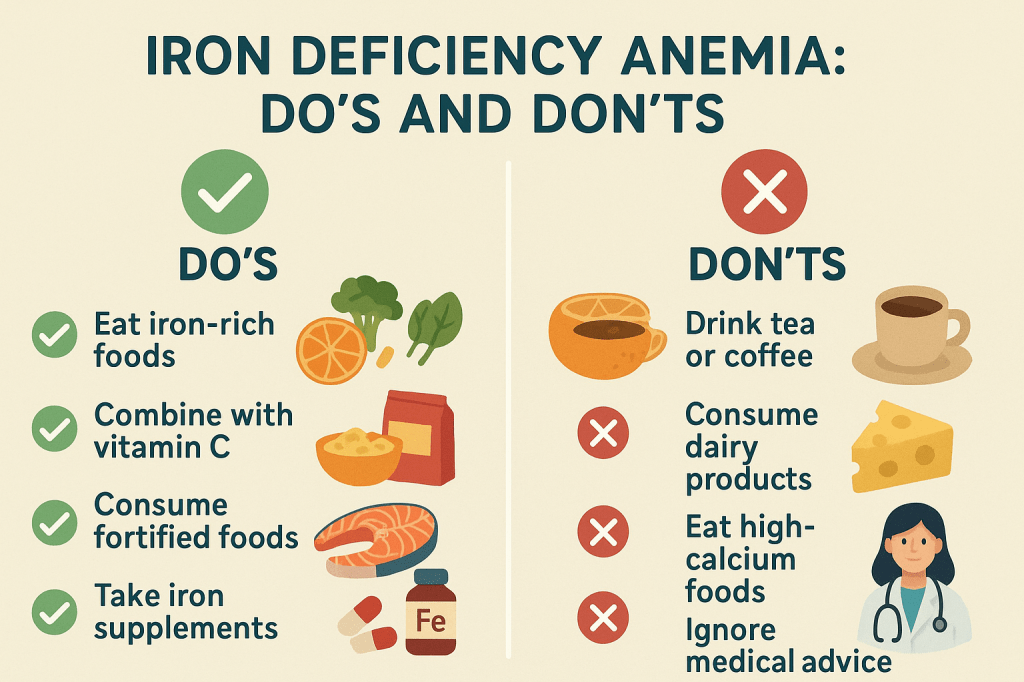
Iron deficiency anemia is a common condition where the body lacks enough healthy red blood cells due to insufficient iron. This can lead to symptoms like fatigue, weakness, and shortness of breath. Managing this condition effectively involves understanding the best practices and pitfalls related to diet and lifestyle.
✅ Do’s: Best Practices for Managing Iron Deficiency Anemia
1. Incorporate Iron-Rich Foods into Your Diet
- Heme iron sources (more easily absorbed): Red meat, poultry, and fish
- Non-heme iron sources (plant-based): Lentils, beans, tofu, spinach, and fortified cereals.
Including a variety of these foods can help increase your iron intake.
2. Enhance Iron Absorption with Vitamin C
Consuming vitamin C-rich foods alongside iron-rich meals can boost absorption. Examples include oranges, strawberries, bell peppers, and tomatoes.
3. Follow Your Healthcare Provider’s Supplement Recommendations
If prescribed iron supplements, take them as directed. Some studies suggest that taking iron every other day may improve absorption and reduce side effects.
4. Monitor Your Iron Levels Regularly
Regular blood tests can help track your progress and ensure that your iron levels are improving with treatment.
❌ Don’ts: Common Mistakes to Avoid
1. Avoid Consuming Iron Inhibitors with Iron-Rich Meals
Certain foods and beverages can hinder iron absorption:
- Calcium-rich foods: Dairy products like milk and cheese
- Beverages: Coffee, tea, and red wine
- High-fiber foods: Whole grains and bran
It’s advisable to consume these at different times than your iron-rich meals.
2. Don’t Self-Diagnose or Self-Treat
Always consult with a healthcare provider before starting any supplementation, as excessive iron can be harmful.
3. Don’t Ignore Symptoms
If you experience persistent fatigue, dizziness, or shortness of breath, seek medical advice promptly.
📝 Conclusion
Managing iron deficiency anemia involves a combination of dietary adjustments, proper supplementation, and regular medical supervision. By following these do’s and don’ts, you can effectively address the condition and improve your overall health.
 The Balanced Diet
Leave a comment